
 Book Now
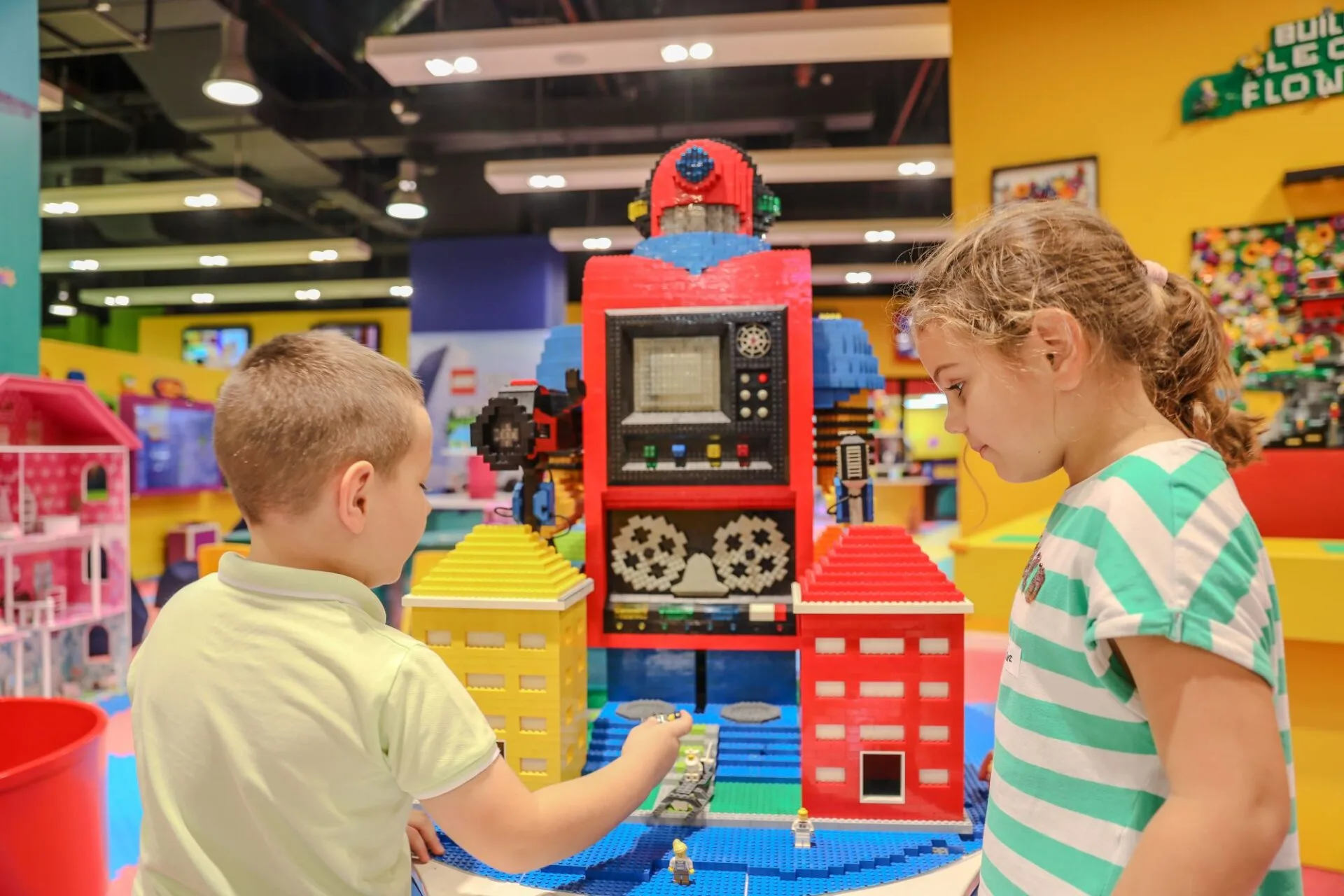
Building brick play supports children’s development more effectively than screen time because it engages fine motor skills, hands-on problem-solving, and real-world social interaction, while screen time is largely passive and offers limited physical or interpersonal engagement. For parents and educators looking to reduce screen dependency, structured brick play is one of the most effective and enjoyable alternatives.
With children spending more time in front of tablets and phones than ever before, many parents and schools are asking a simple question: what’s actually better for a child’s development screen time or hands-on play? Building brick activities offer a compelling, research-backed answer.
Why Compare Building Brick Play and Screen Time?
Both activities keep children occupied, but they engage the brain in very different ways. Screen time tends to be passive and one-directional — children watch, tap, or swipe, with limited physical movement or creative decision-making. Building brick play, on the other hand, is active and open-ended, requiring children to plan, build, adjust, and problem-solve in real time.
Understanding this difference helps parents and schools make more informed choices about how children spend their free and structured play time.
What Are the Developmental Benefits of Building Brick Play?
- Fine motor skill development: Picking up, connecting, and manipulating small bricks strengthens hand-eye coordination and dexterity.
- Problem-solving and critical thinking: Building structures requires planning, trial and error, and spatial reasoning.
- Creativity and imagination: Open-ended building lets children design their own ideas rather than follow a fixed script.
- Social skills: Group building activities encourage communication, sharing, and teamwork.
- Focus and patience: Completing a build teaches children to sustain attention on a task over time.
For a full breakdown of these benefits, see our guide on whether building brick activities are good for child development.
What Are the Downsides of Excessive Screen Time for Children?
- Passive engagement: Most screen-based content requires little active thought or physical involvement.
- Reduced physical activity: Extended screen use often replaces movement-based play.
- Limited social interaction: Solo screen use can reduce opportunities for face-to-face communication.
- Overstimulation: Fast-paced content and games can overstimulate young children, making it harder for them to self-regulate afterward.
- Sleep and attention effects: Pediatric health guidelines widely note links between high screen exposure and disrupted sleep or shortened attention spans in young children.
For a deeper look at recommended limits by age group, see our guide on how much screen time is too much for kids.
Is All Screen Time Bad for Kids?
Not necessarily. Educational apps or age-appropriate video content, used in moderation and with adult guidance, can offer some value. The concern is less about screens existing and more about screens replacing hands-on, social, and physical play as a child’s default activity. Most pediatric guidelines recommend limiting recreational screen time for young children and prioritizing active, hands-on alternatives instead.
How Can Parents Reduce Screen Time with Building Brick Play?
- Set a “build before screen” routine: Encourage a short building session before screen time is allowed.
- Make it social: Group brick play with siblings, friends, or classmates adds a social layer screens can’t replicate.
- Introduce challenges: Timed builds, themed structures, or copy-the-design challenges keep brick play engaging over time.
- Use structured sessions: Guided brick play sessions at a dedicated play center can offer more variety and challenge than free play at home.
For Abu Dhabi families and schools looking for a structured, screen-free activity, Pop in & Play offers building brick sessions designed to keep children engaged through hands-on building, teamwork, and creative challenges, a practical, enjoyable alternative to screen-based downtime.
Frequently Asked Questions
Is building brick play better than screen time for children?
Yes, building brick play generally offers more developmental benefit than screen time, since it actively engages fine motor skills, problem-solving, creativity, and social interaction, while screen time is largely passive.
How much screen time is recommended for young children?
Most pediatric guidelines recommend limiting recreational screen time for children under 5, with an emphasis on hands-on, active, and social play as the primary form of daily engagement.
What skills do children develop through building brick play?
Building brick play develops fine motor skills, spatial reasoning, problem-solving, creativity, and — in group settings — communication and teamwork.
Can building brick play help reduce a child’s screen dependency?
Yes, introducing structured, engaging brick play sessions as a routine alternative can help reduce a child’s reliance on screens for entertainment or downtime.
Is some screen time okay for kids?
In moderation and with adult guidance, age-appropriate educational content can have some value. The main concern is screens replacing hands-on and social play as a child’s primary activity.
